Samuel Reeder

Associate Engineer at AMD · ML Systems & GPU Computing

Hi, I’m a fourth-year student at the University of Toronto, studying computer science, mathematics, and statistics. At AMD, I work on the software stack underlying modern AI: GPU kernels, their delivery to users, and the benchmarking infrastructure to measure their performance at scale. On my own time, I enjoy training and running models locally. I’m also into skiing, Formula 1, and sim racing.

Graduating April 2027. Seeking full-time roles.

Work

AMD / hipDNN & MIOpen

5 days→3 hours
Exhaustive performance sweep duration

Built a Python and Kubernetes framework on Azure Kubernetes Service to distribute model sweeps across 256 GPUs during my AMD internship.

Reported workflow result: roughly 40× shorter elapsed time for the full sweep, not an individual GPU kernel.

Associate Engineer

May 2026 – present

Lead development of hipDNN’s Python benchmarking infrastructure, including time-series tracking and nightly parallel sweeps over 1,197 kernel-shape cases across three GPU architectures. Authored an RFC and implemented runtime pass-by-value tensors, enabling AITER FlashAttention prefill and paged-attention decode kernels with up to 1.8× speedup. Implemented a file-driven kernel descriptor loader, replacing hard-coded engine tables with validated runtime descriptor discovery.

Explore hipDNN

240+ PRs landed · 350+ reviewed · Four AMD Director’s Spotlight Awards

Projects

AsciiNet

Python / PyTorch / CUDA / ConvNeXt / Transformers

Designed and trained a 28M-parameter ConvNeXt/transformer from scratch to turn images into ASCII art in one pass. Distilled a subject-aware glyph-selection pipeline into the network, then paired it with SANA-Sprint to turn text prompts into pictures and pictures into characters.

24 ms / image · 0.31 GiB peak VRAM

At 80 columns on an RTX 5080: 4.5× faster than the teacher pipeline (108 ms/image). Image conversion only; prompt generation and model loading are separate.

Evaluation and training loss

At 80 columns, AsciiNet answered 157 of 480 held-out, five-choice recognition questions correctly (32.7%); its teacher answered 170 (35.4%), a 2.7-percentage-point gap. The judge was Qwen3-VL-8B; chance is 20%. These are automated recognition scores. The examples below are curated illustrations.

Final training loss: approximately 1.503, averaged over the last 100 steps of the second training phase, including 1.043 glyph cross-entropy. This measures how closely the model fits its teacher's targets; the recognition test above compares the legibility of their outputs.

Saved model outputs, generated locally. SANA-Sprint produced the source illustrations; AsciiNet chose every character. Switch examples and widths to compare the same image at two resolutions.

Generative Piano AI

Python / PyTorch / MIDI / Docker

Curated a MIDI dataset of 100+ classical pieces, designed and trained a transformer model, and fine-tuned it with reinforcement learning on human ratings. The model generates note sequences, durations, and velocities.

Waveform of the generated piano sample.
Watch the recorded generation demo
Recorded model output. The original audio renderer cuts a note’s reverb when the next begins; this sample is a demonstration, not a quality benchmark.An instrumental piano sequence generated by the model. There is no speech. The optional video shows terminal windows running training and generation commands; it is a workflow recording, not a notation or keyboard animation.

Caspr

TypeScript / Next.js / Three.js / Firebase

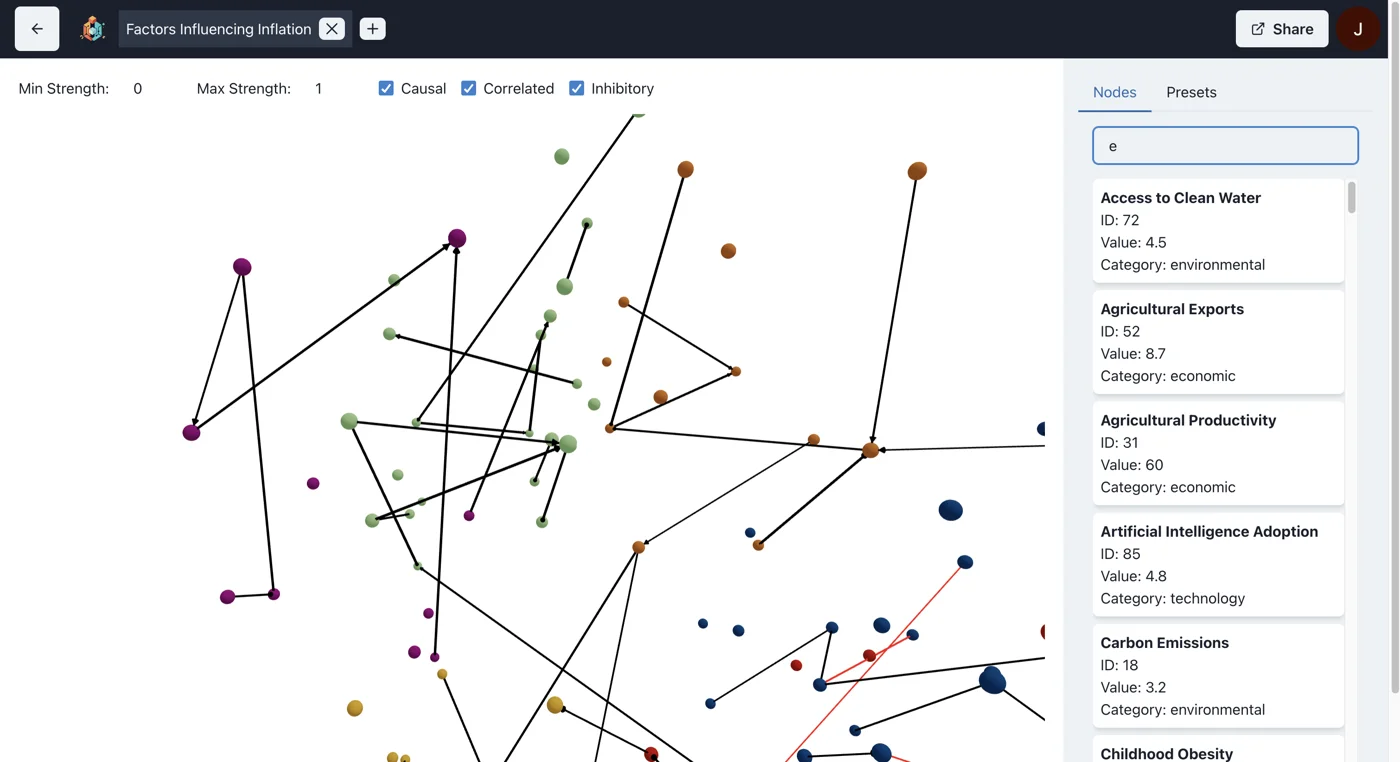
Built a causal-graph visualization platform for University of Toronto AI researchers, leading a seven-developer student team. Created for the U of T Machine Learning Group.

Caspr application: a 3D causal graph with labeled connected nodes, a details panel, and search and filtering controls.
Authentic application capture from the team repository. JSON graph data becomes an interactive 3D view with search, filtering, and sharing.

MIPS Tetris

MIPS Assembly / Bitmap graphics

Implemented a complete Tetris game in 1,200+ lines of 32-bit MIPS assembly, including native 2D graphics, piece rotation, line clearing, score tracking, and a next-piece queue.

Original gameplay recording, converted from GIF to a controllable silent video. Run the assembly source in Saturn or MARS.A silent, 16-second recording of tetrominoes moving, rotating, and stacking in the MIPS bitmap display.

Background

University of Toronto · HBSc

Computer Science Specialist in Artificial Intelligence, with Statistics and Mathematics minors. Expected April 2027.

AMD

May 2026 – present

Associate Engineer

Lead hipDNN benchmarking and API work. Built one-command agentic harness setup tooling adopted as standard onboarding by 9+ teams, and presented two talks to roughly 100 AGS Libraries engineers.

AMD

May 2025 – May 2026

AGS Libraries Software Development Intern

Landed 240+ PRs and reviewed 350+ more across ROCm’s public C++ GPU-library repositories, spanning graphs, GPU backends, validation, logging, and distributed performance testing.

DataAnnotation Tech

May – Oct. 2024

Data Analyst & Programmer

Authored and debugged RLHF code corpora in C++, Rust, and Python. Analyzed prompt-response datasets for distribution shifts and label noise.

GoChain

May – Oct. 2022

Software Engineer Intern

Redesigned the GoTrace frontend, debugged the Go-based GoChain blockchain node daemon, and developed gochain.io for outreach and recruiting.